
Views: 0 Author: Site Editor Publish Time: 2026-04-27 Origin: Site
Upgrading operatory lighting remains a critical capital decision for any modern practice. It directly impacts your diagnostic accuracy, physical stamina, and overall patient comfort. Unfortunately, legacy halogen lights and an over-reliance on loupe-mounted headlamps often lead to severe eye strain. They cast frustrating shadows across the oral cavity and disrupt efficient assistant collaboration. We understand these daily clinical hurdles intimately. Therefore, we provide a comprehensive clinical-and-commercial evaluation framework below. You will learn how to select a modern Dental Operating Light that maximizes your return on investment. Furthermore, you will discover how these advanced illumination systems integrate seamlessly with your existing Dental Instruments. By prioritizing optical health and workflow efficiency, you can transform your daily operatory experience. This guide empowers you to make an informed, future-proof procurement choice for your entire dental team.
Color accuracy over pure brightness: High CRI and optimal CCT (4000K–5000K) are non-negotiable for composite shade matching.
The 1:5 illumination rule: Balancing task lighting (e.g., 20,000 Lux) with ambient lighting (e.g., 4,000 Lux) is vital to reduce practitioner eye fatigue.
Workflow continuity: Features like composite-safe (anti-curing) modes and touchless controls streamline restorative procedures and improve infection control.
Ergonomics matter: Drift-free mechanical arms and wide-angle beam distributions are essential for efficient four-handed dentistry.
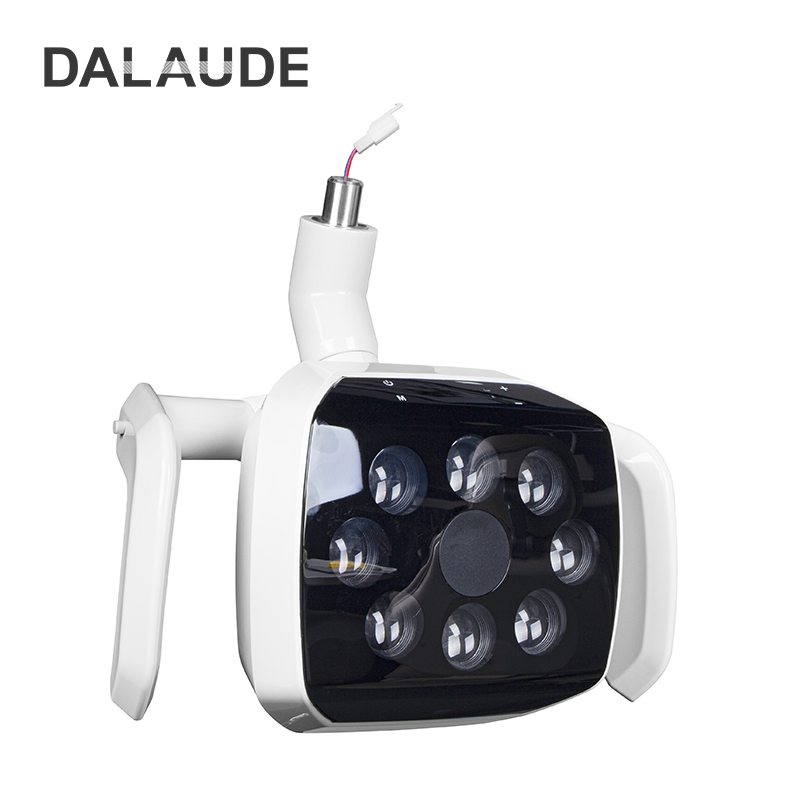
Poor lighting quietly drains clinical profitability. It leads to expensive restorative re-dos caused by subtle shade mismatches. Slower procedure times naturally occur when you struggle to see posterior margins. Furthermore, inadequate illumination accelerates premature practitioner burnout. You might not notice the immediate financial impact of eye strain. However, chronic fatigue reduces your daily patient capacity. Upgrading your clinical lighting eliminates these hidden costs. It creates a seamless visual environment where precision becomes effortless.
Many practitioners hold a common misconception. They believe powerful headlamps eliminate the need for overhead operatory lights. We must address this implementation reality directly. Headlamps provide excellent coaxial task lighting. However, they only illuminate the doctor's specific focal point. In true four-handed dentistry, the doctor and assistant maintain a focal length difference of 6 to 8 inches.
If you rely solely on loupes, your assistant operates in the dark. A high-quality overhead light provides broad, cross-arch illumination. This broad coverage ensures dual visibility. It allows your assistant to anticipate needs, hand off Dental Instruments safely, and maintain a clear view of the working field.
Patient comfort directly influences case acceptance rates. Harsh, glaring lights induce immediate anxiety. If light intensity exceeds discomfort thresholds like 20 cd/cm², patients will squint and tear up. Modern LED systems solve this problem through advanced glare reduction. They offer warm-light resting modes during consultations. A calm, visually comfortable patient is more likely to listen, understand, and accept comprehensive treatment plans. Good lighting transforms the operatory from a sterile clinic into a welcoming care environment.
You cannot perform high-end cosmetic restorations without flawless color perception. This makes Color Rendering Index (CRI) and Correlated Color Temperature (CCT) vital metrics. The clinical standard for mimicking natural daylight sits between 4000K and 5000K. Operating within this specific CCT range prevents tissue color distortion.
Simultaneously, a high CRI (ideally above 90) guarantees accurate shade selection. A direct correlation exists between high CRI and successful composite shade matching. When your light accurately reflects the true color of enamel and dentin, you avoid costly aesthetic failures.
We must acknowledge a fundamental fact of light. Dentists shift their gaze away from the bright oral cavity at least twice per minute. They look at monitors, trays, or assistants. If the room is dark and the mouth is brilliant, pupil micro-adjustments occur constantly.
To prevent severe eye fatigue, you must follow the 1:5 illumination rule. This rule highlights the absolute necessity of maintaining a proper ratio between your ambient room light and targeted surgical light.
Clinical Scenario | Task Lighting (Oral Cavity) | Required Ambient Lighting (Room) | Visual Impact |
|---|---|---|---|
Standard Exam | 10,000 Lux | 2,000 Lux | Comfortable transitions |
Restorative Work | 20,000 Lux | 4,000 Lux | Ideal for shade matching |
Complex Surgery | 30,000 Lux | 6,000 Lux | Maximum cavity penetration |
Aging practitioners face long-term macular risks from prolonged blue light exposure. Not all LED spectrums are created equal. You must evaluate the LED spectrum of your chosen equipment. Ensure it maintains a healthy balance between blue and green-red peaks. High-quality optical designs filter out harmful blue spikes. They protect your retinas while still delivering the crisp, white light necessary for precise clinical diagnosis.
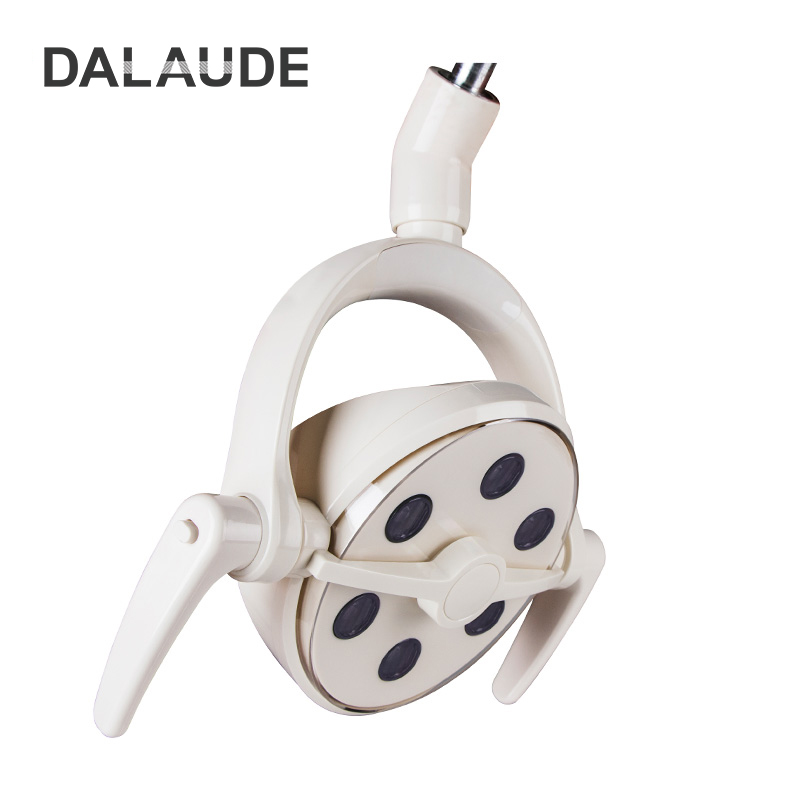
Modern restorative dentistry relies heavily on light-cured resins. A dedicated composite-safe mode is an essential ROI driver. This anti-curing setting intentionally filters out specific blue light wavelengths. These are the exact wavelengths responsible for premature photo-initiation. By removing them, the light prevents the early hardening of composites. It buys the clinician significantly more time for precise sculpting and layering. Crucially, it achieves this without dimming the overall workspace. You retain perfect visibility while manipulating delicate materials.
A static light limits your clinical flexibility. Look for advanced systems that allow seamless toggling between different environments. You need distinct modes for different procedures.
Surgical Brightness: Maximum lux for deep cavity preparation and implant placement.
Standard Restorative: Balanced 5000K light for everyday diagnostics and hygiene.
Warm Consultation: Lower temperature (2700K–3500K) to relax patients during case presentations.
Shadows hide critical margins and anatomy. Single-bulb legacy lights create harsh, unyielding shadows. Modern units utilize multi-lens LED arrays. These overlapping light beams strike the oral cavity from hundreds of microscopic angles. This advanced geometry eliminates shadows caused by hands, heads, or Dental Instruments entering the light path. You achieve continuous, shadow-free illumination regardless of your operating posture.
Cross-contamination remains a primary concern in any busy practice. Physical switches harbor pathogens. Touchless sensors and gesture controls eliminate this risk. Induction switches allow you to adjust intensity or toggle composite-safe modes without surface contact. This strictly adheres to modern aseptic protocols. Furthermore, look for smooth, sealed light heads. An absence of cooling vents or deep crevices allows for rapid, effective wipe-downs between patients.
Optical brilliance means nothing if the light head refuses to stay put. Perfectly counterbalanced mechanical arms define ergonomic success. You need smooth, one-handed articulation.
Common Red Flags to Avoid:
Sagging: The light slowly drops over time, requiring you to pause and lift it.
Drifting: The arm swings horizontally away from the midline.
Stiff Articulation: Moving the light requires forceful two-handed effort, breaking your clinical concentration.
You must evaluate your specific operatory footprint before selecting a mounting configuration. Your ceiling height, existing cabinetry, and chair layout dictate the best choice. Ceiling mounts work well for open-concept rooms. Track mounts offer maximum travel for diverse positioning. Chair-mounted systems integrate neatly into smaller footprints. Cabinet-mounted units provide flexibility when ceiling structures cannot support heavy articulated arms.
The total cost of ownership extends far beyond the initial purchase price. Legacy halogen systems drain clinic resources through continuous maintenance and power consumption. Modern LED platforms offer vastly superior lifecycle economics.
Feature | Modern LED System | Legacy Halogen System |
|---|---|---|
Expected Lifespan | 50,000+ hours | 500 to 1,000 hours |
Energy Efficiency | Consumes 70% less power | High baseline power draw |
Thermal Management | Emits virtually no radiant heat | Produces significant heat output |
HVAC Impact | Keeps clinical team comfortably cool | Increases clinic air conditioning loads |
A standalone light often creates logistical headaches. You must assess integration scalability. Ensure your chosen light maintains compatibility with existing delivery units. It should fit seamlessly into your broader ecosystem of Dental Instruments. Open-architecture mounting posts and universal wiring harnesses prevent expensive custom retrofits.
Even premium equipment occasionally requires service. Assess manufacturer support carefully before finalizing your capital purchase. Investigate the reality of their warranty coverage. Do they cover articulated arm recalibration? How do they handle localized LED diode failures? A robust five-year warranty covering both parts and optical degradation provides genuine peace of mind.
Never buy a light based purely on a brochure. You must first audit your physical clinical space. Measure your baseline ambient lighting. Consider your natural window light; north-facing windows provide optimal, diffuse daylight. Understanding your baseline room lux helps you select the correct maximum lux requirements for your new overhead light.
Match your equipment capability to your specific clinical workflow. Practices vary wildly in their daily procedures.
High-volume Restorative Practices: You should prioritize composite-safe efficiency, ultra-high CRI for shade matching, and fast touchless toggles.
Surgical-heavy Practices: You require maximum shadowless cavity penetration, wider light patches, and extreme intensity (up to 30,000 lux).
Hygiene-focused Rooms: You benefit most from wide, diffuse beams and patient-comfort warm modes.
Sales representatives often highlight pure brightness. Do not just look blindly into the light during a demonstration. Test the equipment clinically. Pull the arm out fully and check for drift. Wave your hand over the touchless sensor to measure latency. Place an object beneath the beam to evaluate edge-fading and shadow reduction. A proper physical test reveals the true engineering quality.
A high-performance dental operating light functions as far more than mere utility lighting. It stands as a core piece of diagnostic equipment. Upgrading your illumination transforms how your team operates, reducing physical strain and elevating clinical outcomes. By moving away from outdated halogen technology and single-source headlamps, you empower your practice.
Actionable Next Steps:
Audit your current operatory ambient lighting to ensure you can meet the 1:5 ratio rule.
Prioritize optical health features, specifically blue-light safety and high CRI, over raw brightness metrics.
Demand workflow enhancements like composite-safe anti-curing modes and reliable touchless sensors.
Test the mechanical stability of the articulated arm rigorously before signing any procurement contract.
By following this framework, you guarantee a future-proof, ROI-positive investment that protects your vision and enhances patient care.
A: High CRI ensures accurate color perception of human tissue and composite resins, drastically reducing the risk of shade mismatches and costly restorative re-dos.
A: Yes. While loupes provide excellent coaxial task lighting, an overhead light is required for cross-arch visibility, reducing background shadowing, and providing the dental assistant with adequate illumination for four-handed dentistry.
A: It is a specific light setting that filters out the blue wavelengths responsible for activating photo-initiators in composite resins, giving dentists more time to shape materials without premature hardening.
A: Keeping the operating zone no more than 5 times brighter than the surrounding room prevents the eyes from having to aggressively dilate and constrict every time the dentist looks away from the patient's mouth, minimizing daily eye strain.


