
Views: 0 Author: Site Editor Publish Time: 2026-04-22 Origin: Site
Preclinical dental education is undergoing a rapid, massive evolution right now. Dental academic programs are aggressively transitioning from traditional phantom heads to advanced, data-driven simulation environments. However, dental schools face a difficult institutional challenge today. Administrators must constantly balance high capital expenditures for modernization against the urgent need to improve clinical readiness and student board pass rates. Legacy training setups simply cannot keep pace. Modern accreditation standards demand objective performance data to verify student competency.
This article evaluates the strategic advantages of adopting high-fidelity simulation technology. You will learn the exact criteria for evaluating, procuring, and implementing these advanced systems in a highly competitive academic environment. We explore how modern pedagogical tools directly impact student psychomotor outcomes. They also reduce long-term operational costs and thoroughly prepare cohorts for real-world patient care.
Advanced simulation bridges the gap between didactic learning and live-patient clinics, accelerating psychomotor skill acquisition.
Modern systems provide objective, data-driven assessment, standardizing how faculty grade and correct student techniques.
While initial capital investment is high, the Total Cost of Ownership (TCO) is offset by long-term operational efficiencies and reduced material waste.
Successful implementation requires careful evaluation of haptic vs. traditional systems, space planning, and faculty adoption strategies.
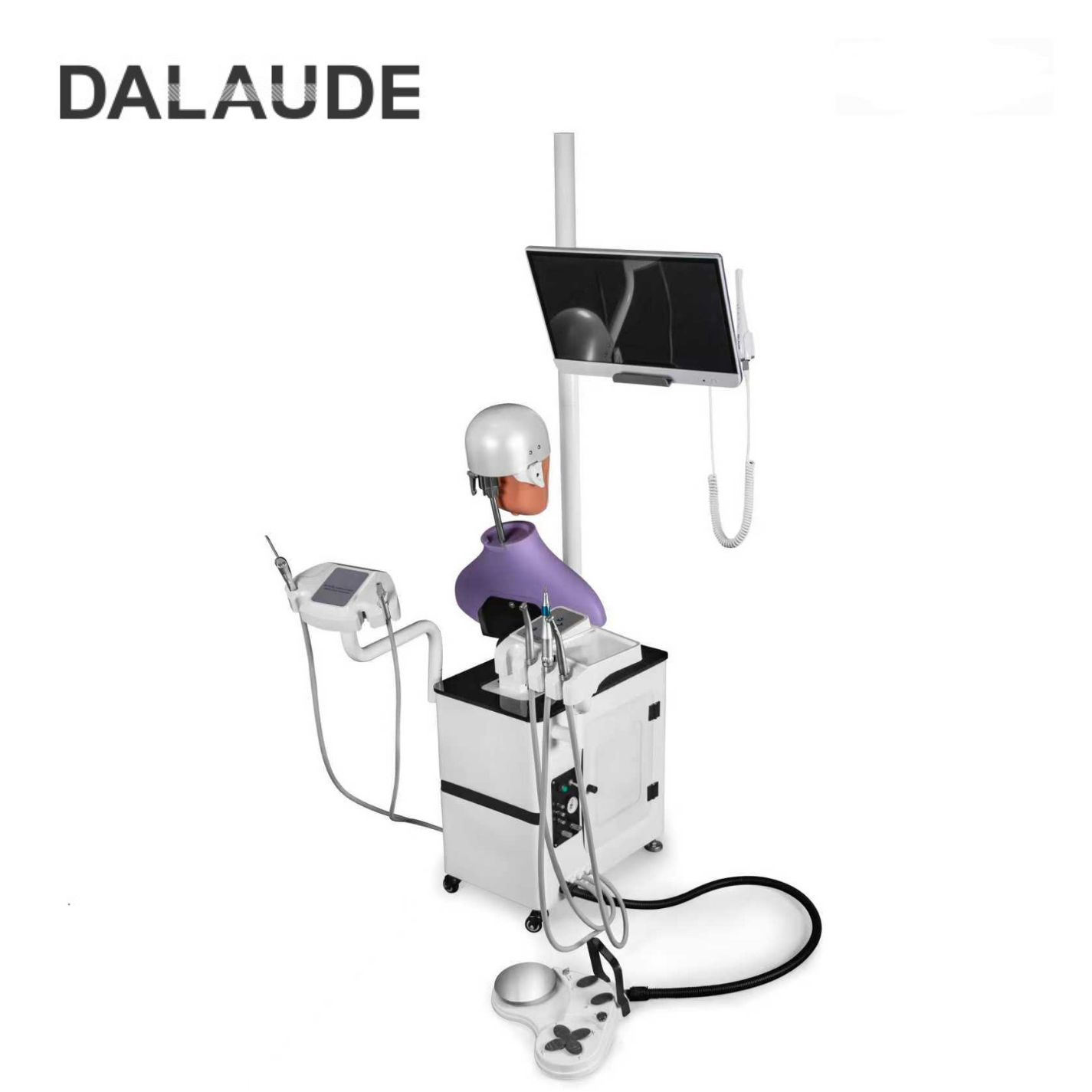
Students historically face immense difficulties moving from textbook theories to live clinical operations. Textbooks teach ideal anatomy. Live patients present unpredictable variables. This transition creates a severe "clinical readiness gap." Novice operators often experience high anxiety during their first live procedures. They struggle to translate two-dimensional diagrams into three-dimensional spatial awareness. This cognitive overload slows down clinical workflows. It also compromises early-stage confidence.
For decades, dental programs relied solely on extracted teeth and basic mannequins. This legacy approach created severe training bottlenecks. Extracted human teeth offer authentic feel. However, they present massive supply chain issues today. Better global preventive dentistry means fewer usable extracted teeth are available. Moreover, naturally extracted teeth feature highly inconsistent anatomy. One student might practice on a simple occlusal cavity. Another student might struggle against complex, multi-surface decay. You cannot standardize assessments under these conditions.
Basic mannequins also fail to provide objective feedback. Faculty members must visually inspect preparations. Visual grading introduces subjective bias. It also limits real-time error correction. If a student makes a mistake, they rarely know it until the final grading phase.
We must redefine early-stage training success. Successful training today requires measurable data. Dental programs evaluate success through three primary metrics:
Reduced student attrition: Catching struggling students early prevents costly dropouts.
Faster competency achievement: Reaching accreditation milestones quicker allows more time for advanced clinical practice.
Enhanced patient safety: Minimizing errors prior to clinic entry protects patients and reduces institutional liability.
Dentistry is a highly tactile profession. Operators must develop precise micro-motor skills. Modern simulators provide consistent, repeatable physical resistance. This resistance closely mimics human enamel, dentin, and pulpal tissue. Students can master the tactile feel of handling high-speed Dental Instruments long before entering the live clinic. Proper instrument grip, finger rests, and pressure modulation require intensive muscle memory. Digital and physical simulators allow students to repeat identical preparations dozens of times. This repetition safely ingrains correct hand-eye coordination.
Subjective grading frustrates students. It also creates inconsistencies among faculty members. Built-in analytics remove human grading biases entirely. Advanced systems use tracking software to measure preparation depth, wall angulation, and margin smoothness. The software compares student work against perfect digital master files. It generates immediate, color-coded feedback reports. Faculty receive measurable progression data. They can easily track cohort performance over a full semester. This objective documentation proves invaluable during rigorous accreditation reviews.
Live patient clinics offer zero margin for error. A minor slip causes severe patient pain or permanent tissue damage. Simulators create a completely fail-safe environment. Students can make critical errors safely. For example, a student might cause a pulp exposure during a deep cavity prep. In a simulation lab, this error causes no harm. It simply becomes a powerful teaching moment. The student resets the digital or physical model. They immediately try the procedure again. This zero-risk repetition builds deep clinical resilience. It removes the paralyzing fear of failure.
Live clinics rely on random patient pools. You can never guarantee a student will encounter specific clinical scenarios. Some students might graduate having never treated a complex class IV fracture. High-fidelity simulators solve this deficiency completely. Faculty can program diverse anatomical variations into the curriculum. You can load rare pathologies, complex root canal curvatures, or atypical pediatric cases into the system. Every student receives guaranteed exposure to a standardized set of complex clinical challenges.
Traditional labs require a high faculty-to-student ratio. Instructors constantly walk the aisles to monitor basic technique acquisition. This process wastes valuable faculty time. Modern simulation shifts this dynamic. The software handles basic step-by-step guidance. It monitors the initial preparation stages autonomously. You can significantly reduce supervision ratios for introductory courses. This reduction frees up highly paid clinical educators. They can focus their expertise on advanced instruction and complex case discussions.
Administrators must understand the primary tiers of available technology. Not all systems serve the same pedagogical purpose. Choosing the right category depends on specific institutional goals.
Technology Tier | Description | Best Use Case |
|---|---|---|
Advanced Phantom Heads | Physical mannequins utilizing synthetic materials. Features advanced water drainage and realistic articulation. | Basic restorative dentistry, ergonomics training, and high-volume student access. |
Augmented Reality (AR) Overlays | Projects digital targets onto physical models. Provides real-time visual guidance during physical cutting. | Bridging physical tactile feedback alongside digital assessment tracking. |
Fully Haptic VR Simulators | Virtual environments utilizing force-feedback styluses. No physical teeth are cut. | Endodontics, complex anatomy visualization, and zero-waste repetition. |
Higher fidelity usually means higher costs. You must evaluate how closely a system mirrors actual human tissue. Assess jaw mechanics, cheek elasticity, and tongue interference. However, do not overbuy technology. Ensure the fidelity level aligns directly with your specific preclinical courses. A first-year morphology class might only require basic 3D software. A third-year advanced prosthodontics course demands highly precise physical or haptic resistance.
Hardware is only half the equation. You must thoroughly evaluate the simulator's learning management system (LMS). Ask vendors about data integration. The simulator software must communicate seamlessly with your institution's existing academic software. If faculty must manually export and upload grades, they will inevitably resist using the system. Look for cloud-based dashboards. Ensure the vendor provides robust API access for seamless data synchronization.
Cohorts of stressed students are incredibly hard on equipment. Industrial design matters deeply. The units must withstand relentless daily abuse. Evaluate the durability of hinges, monitor arms, and handpiece connections. Furthermore, do not ignore ergonomics. The simulator must enforce proper operator posture. Realistic patient positioning teaches students how to sit correctly. Good ergonomics prevent career-ending musculoskeletal injuries later in life.
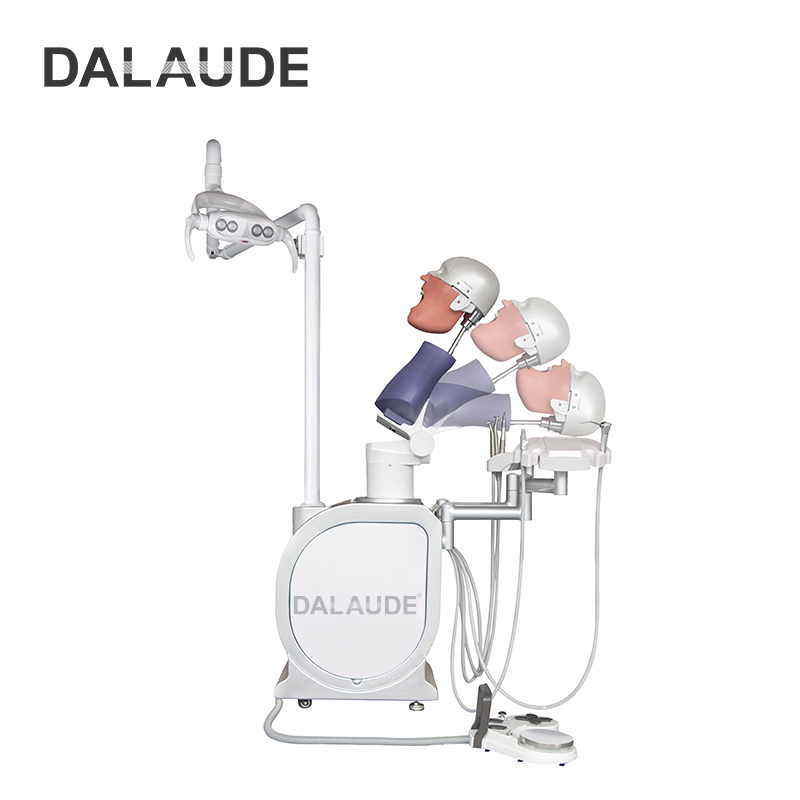
Building a modern lab requires substantial initial funding. The hardware units represent only a portion of the total CapEx. You must meticulously map out facility retrofitting costs. Consider the following upfront requirements:
High-performance server infrastructure to handle massive data loads.
Extensive network drops to ensure zero latency during digital procedures.
Upgraded electrical panels to handle increased power draws.
Specialized cabinetry and reinforced flooring for heavy equipment.
Decision-makers often underestimate recurring costs. You must forecast OpEx accurately to avoid budget shortfalls. Key ongoing expenses include:
Annual software licensing and cloud storage fees.
Comprehensive maintenance contracts and extended warranties.
Routine replacement parts, including synthetic teeth, gingiva, and burs.
Dedicated IT support staff to troubleshoot vendor connectivity issues.
Simulation labs deliver strong financial and academic returns over time. The return on investment (ROI) extends far beyond simple cost savings. You eliminate the costly procurement, processing, and sterilization of extracted teeth. You dramatically decrease faculty remediation time. Struggling students catch up faster. This efficiency lowers costly student drop-out rates. Finally, a state-of-the-art lab elevates institutional prestige. Premium facilities attract top-tier student applicants. They also impress alumni donors and facilitate lucrative grant acquisitions.
Technology alone cannot fix a broken curriculum. Faculty resistance remains the most common point of implementation failure. Veteran instructors often distrust new grading paradigms. They prefer traditional visual inspection methods. You must address this skepticism immediately. Include key faculty stakeholders early in the evaluation process. Implement intensive train-the-trainer programs months before students arrive. Faculty must feel completely confident using the software. If instructors struggle to load a module, students will instantly lose faith in the system.
Simulators are never plug-and-play solutions. You cannot simply drop new machines into an old syllabus. The entire curriculum must undergo a thorough realignment. Academic committees must rewrite syllabi to integrate specific simulation milestones. Students must achieve verified digital competency scores before gaining permission to enter the live clinic. This backward integration takes significant planning. It requires aligning simulator exercises directly with specific didactic lectures.
Attempting a massive, school-wide launch usually ends poorly. IT bottlenecks and user errors will overwhelm your support staff. We strongly recommend a phased pilot approach. This strategy significantly mitigates implementation risks.
Phase 1: Deploy a small cluster of units for an introductory operative dentistry course. Focus strictly on basic class I and class II preparations.
Phase 2: Gather user feedback. Refine the grading rubrics and fix any network latency issues.
Phase 3: Expand the technology into more complex disciplines. Integrate modules for endodontics or fixed prosthodontics.
Phase 4: Roll out the platform to all preclinical cohorts. Mandate simulation competency for all clinical prerequisites.
Advanced dental simulators fundamentally transform institutional efficiency. They build deep clinical confidence within student cohorts. By providing objective feedback and risk-free repetition, these systems close the readiness gap effectively. They protect patients and streamline faculty workloads simultaneously. However, successful adoption relies heavily on human factors. Smooth curriculum integration and comprehensive faculty training matter just as much as hardware fidelity.
To successfully navigate this transition, administrators should take specific actionable steps. Follow this sequential framework to begin your modernization journey:
Request specialized vendor demonstrations focused on your exact syllabus requirements.
Conduct an internal faculty needs assessment to identify potential areas of resistance.
Calculate a preliminary TCO model based on your specific cohort size and facility constraints.
Establish a core committee of tech-forward clinical instructors to champion the pilot program.
A: Traditional phantom heads use physical synthetic materials. Students physically cut plastic teeth using real rotary tools. Haptic VR systems use a digital stylus. The stylus provides programmed force-feedback to simulate tissue resistance. VR systems generate no physical waste and require no replacement teeth. Phantom heads provide actual tactile feedback but require constant consumable replacements.
A: It depends on the specific hardware tier. Augmented Reality (AR) overlays and traditional mannequins allow students to use their standard, real-world handpieces and mirrors. Fully haptic VR simulators require specialized proxy tools. These proxy devices plug directly into the computer to generate digital resistance. They mimic the weight and shape of standard tools.
A: Modern labs require significant physical space. You must plan for the unit footprint, operator seating, and ADA-compliant aisles. AR and physical units also require infrastructure like compressed air lines and water drainage. Fully digital VR units need less plumbing but require robust server racks and extensive under-floor cabling for high-speed network connectivity.
A: A successful rollout typically requires 12 to 18 months. Procurement and facility retrofitting usually take 6 months. Curriculum mapping and syllabus integration require another 6 months. Finally, you must dedicate at least 2 to 3 months for comprehensive faculty training before allowing student access.


