
Views: 0 Author: Site Editor Publish Time: 2026-01-06 Origin: Site
Dental visits often bring uncertainty, especially with unfamiliar tools. One such tool, the intraoral camera, is transforming dental care by providing a detailed view of your mouth. This small, pen-sized device captures high-resolution images of the teeth and gums, giving both the dentist and patient a clear, real-time visual of oral health.
By the end of this article, you'll understand what an intraoral camera is, how it works, and the benefits it offers in improving diagnostics and treatment outcomes.
An intraoral camera is a compact, handheld device that provides high-resolution images of a patient's mouth. The camera is designed to capture detailed pictures of areas inside the mouth that are difficult to see with traditional dental tools like mirrors or even X-rays. This device allows dentists to view the teeth, gums, and soft tissues in a way that wasn’t possible with earlier diagnostic methods. The camera is small, about the size of a pen, and can be maneuvered to different angles to capture images from various parts of the mouth.
The primary advantage of an intraoral camera is that it shows real-time, high-definition images of the patient’s oral health. Unlike traditional methods, where patients rely on the dentist’s explanation of what they can’t see themselves, the intraoral camera provides a visual aid that both the patient and dentist can view on a monitor during the examination.
The intraoral camera functions by capturing images and transmitting them to a computer or monitor in real-time. Once the camera is positioned inside the mouth, it takes pictures of the area being examined. The images are displayed on a screen that is easily visible to both the dentist and the patient.
One of the remarkable features of an intraoral camera is its ability to zoom in on specific areas, providing up to 100x magnification. This allows dentists to spot minute issues like cracks, cavities, and even early signs of gum disease that may not be visible to the naked eye. The camera also has built-in LED lights that ensure visibility even in the darkest areas of the mouth, enhancing image clarity and aiding in more accurate diagnoses.
An intraoral camera comes with several features that make it a valuable tool in dental diagnostics. Its small size allows it to reach areas inside the mouth that are otherwise difficult to examine with traditional tools. The camera’s high-resolution imaging capabilities provide clear and detailed pictures that enable dentists to diagnose issues early.
Additionally, the camera’s LED lighting is essential for providing adequate illumination, particularly in the deep corners of the mouth. The lighting ensures that every detail, no matter how small, is visible, improving the quality of the diagnosis. This level of detail allows the dentist to track changes in a patient’s oral health over time and make more informed decisions regarding treatment.
For dentists, intraoral cameras are invaluable tools that significantly enhance diagnostic accuracy. These cameras allow dentists to examine the mouth in extreme detail, capturing high-resolution images of areas that are often hard to reach or inspect with the naked eye. The ability to zoom in and examine a specific tooth or gum area provides an advantage in detecting issues like cavities, fractures, or gum disease at an early stage. Early detection is key to preventing more serious oral health problems and ensuring that treatment is more effective and less invasive.
Moreover, the intraoral camera can save time during dental appointments. The dentist can immediately capture and display images on a monitor, making it easier to explain the diagnosis and treatment plan to the patient.
For patients, the intraoral camera improves communication and transparency between the dentist and the patient. When the dentist uses the camera, both parties can view the images on a screen, allowing the patient to see exactly what the dentist is seeing. This transparency helps patients understand their dental health condition better and feel more confident in their treatment decisions.
Patients also benefit from real-time feedback. Instead of waiting for an explanation based on what the dentist sees or feels, they can directly observe any issues on the monitor. This helps reduce anxiety and gives patients more control over their oral health.
Intraoral cameras also play a significant role in streamlining insurance claims and documentation. Insurance companies often require visual evidence before approving coverage for treatment. The high-quality images produced by intraoral cameras serve as solid documentation for treatment, making the insurance claim process faster and more efficient. Additionally, these images can be stored digitally in the patient’s dental record, providing a permanent visual record of the patient’s oral health for future reference.
Benefit | Description |
Enhanced Diagnostic Accuracy | Provides clear, detailed images for accurate diagnoses. |
Improved Patient Communication | Allows real-time viewing of oral conditions by both dentist and patient. |
Efficient Treatment Planning | Helps in developing precise treatment plans with visual evidence. |
Accurate Documentation | Images can be saved for future reference and insurance claims. |
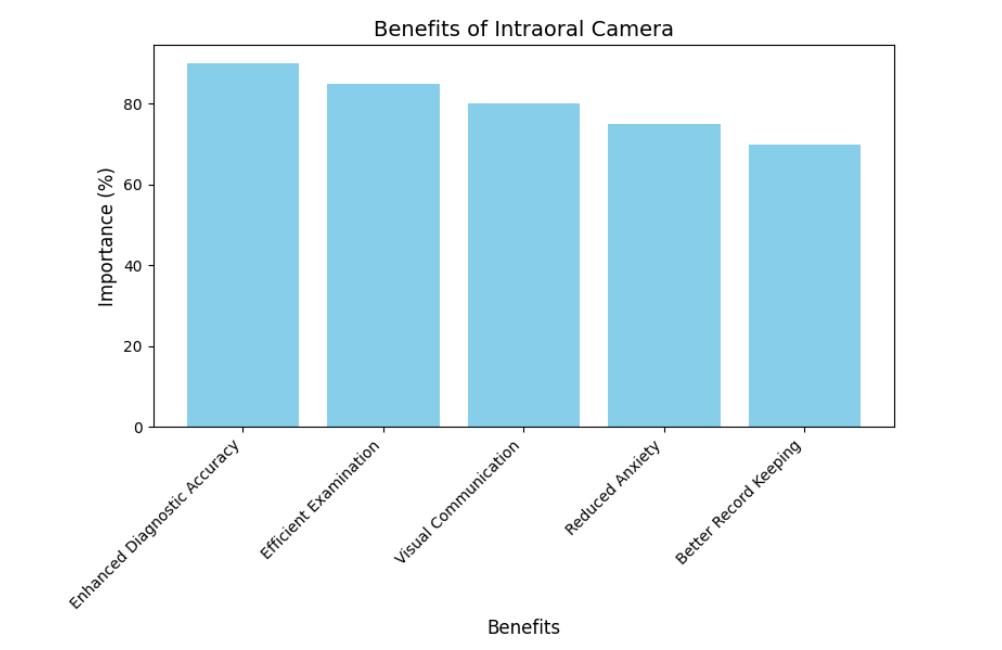
Using an intraoral camera during a dental exam is a straightforward process. First, the dentist explains the procedure to the patient to ensure comfort and understanding. After that, the dentist gently places the camera inside the patient’s mouth and begins capturing images of the teeth, gums, and any other areas of concern.
Once the images are taken, they are displayed on a monitor in real-time, allowing both the dentist and the patient to examine them together. This step-by-step process ensures that the patient understands their oral health condition and is actively involved in the decision-making process.
Intraoral cameras are used for a variety of diagnostic and treatment purposes. They are particularly useful for detecting tooth decay, cracks, fractures, and other types of dental damage that may not be visible during a traditional exam. The camera’s ability to capture high-resolution images of hard-to-reach areas makes it an indispensable tool for evaluating the health of the gums and teeth.
The camera is also helpful in treatment planning. For instance, when preparing for procedures like fillings, crowns, or cosmetic treatments, the dentist can use the images to plan the best course of action based on what is seen in the camera’s footage.
For patients, using an intraoral camera is a non-invasive, comfortable experience. The small size and flexibility of the camera allow it to easily navigate the mouth without causing discomfort. The ability to see live images on a monitor during the examination helps patients understand their oral health better, creating a more interactive and engaging dental visit.
Use Case | Description |
Detecting Decay and Cavities | Identifies small cavities and tooth decay early. |
Assessing Gum Health | Monitors gum disease and inflammation. |
Treatment Planning | Assists in planning procedures like fillings or crowns. |
Insurance Documentation | Provides visual proof for insurance claims. |
One of the most important advantages of using an intraoral camera is its ability to detect problems early. By providing clear, high-resolution images, the camera helps dentists identify issues like cavities, gum disease, and cracks in teeth before they become serious problems. Early detection allows for less invasive treatment, reducing both the time and cost of care.
Intraoral cameras make it easier to track a patient’s oral health over time. The images captured during each dental visit can be saved to the patient’s digital record, providing a visual timeline that can be reviewed during follow-up appointments. This makes it easier for dentists to monitor the progress of treatment and make adjustments as necessary.
Another key benefit of intraoral cameras is the ability to share images with specialists or dental labs for further analysis and treatment planning. The detailed images help ensure that any procedures, such as restorations or cosmetic work, are done with the highest level of accuracy. This collaborative approach improves overall treatment outcomes and ensures that patients receive the best possible care.
Feature | Intraoral Camera | Traditional Tools |
Image Quality | High-resolution, real-time images | Limited visibility with mirrors |
Comfort | Non-invasive and painless | Can be uncomfortable with mirrors and probes |
Visibility | Can capture hard-to-reach areas | Limited view, especially in the back of the mouth |
Documentation | Easy digital storage for records | Manual recording required |
Intraoral cameras are becoming essential in modern dentistry, providing clear, real-time images for better diagnostics and treatment. As technology advances, they will integrate with other diagnostic tools like digital X-rays and 3D imaging, further enhancing accuracy. This tool not only improves patient communication but also fosters informed treatment decisions. Foshan Dade Medical Technology Co., Ltd. offers high-quality intraoral cameras that enhance dental care and provide invaluable diagnostic insights for both patients and dentists.
A: An intraoral camera is a small, pen-sized device that captures high-resolution images of the inside of your mouth, helping dentists diagnose issues like cavities and gum disease with greater precision.
A: The intraoral camera is inserted into the mouth to capture images, which are displayed on a monitor in real-time. This helps the dentist assess oral health and discuss treatment options with the patient.
A: Intraoral cameras offer enhanced diagnostic accuracy, allow for better communication between dentists and patients, and provide real-time images that help with treatment planning and insurance documentation.
A: No, using an intraoral camera is non-invasive and painless. The camera simply captures images of your mouth without causing discomfort.
A: The cost of an intraoral camera can vary depending on the brand and features, but it typically ranges from a few hundred to a few thousand dollars for dental practices.
A: Yes, the dentist will display the images on a monitor in real-time, allowing you to see exactly what they see during the examination.


